Affective relationships in 2050: a future scenario about artificial intelligence and relationships
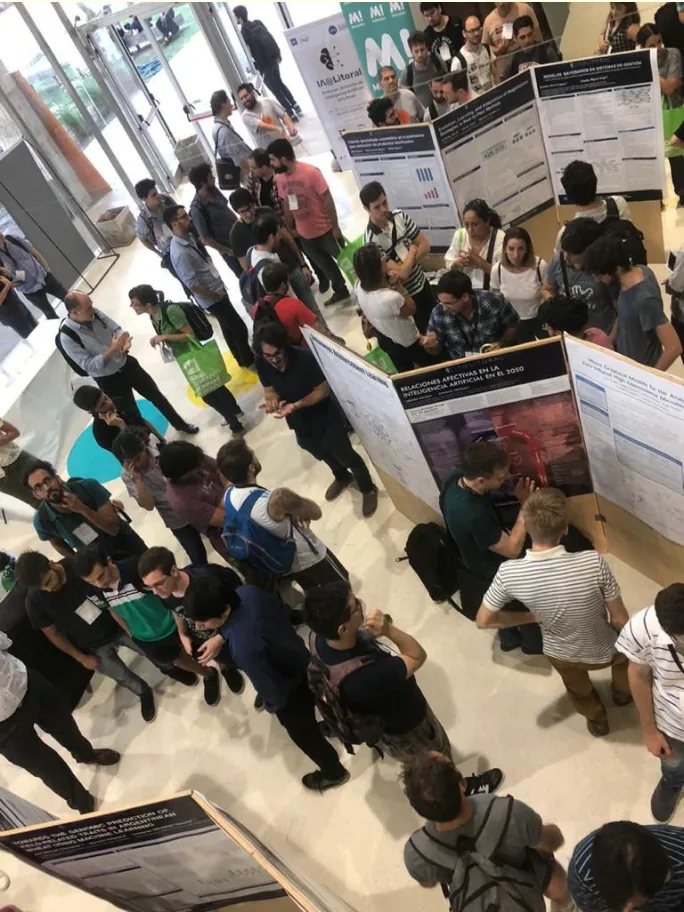
A postgraduate futures-design course at the Universidad Nacional del Litoral, using the Vision in Product Design method: deconstruct the present and build a scenario for 2050, when artificial intelligence surpasses human intelligence, emotions included. In a pair with Stefano Trevisan. The result was a scenario, a product concept, a brochure and a poster selected among more than 200 entries at IA@Litoral 2019, the first artificial intelligence exhibition in the Litoral region.
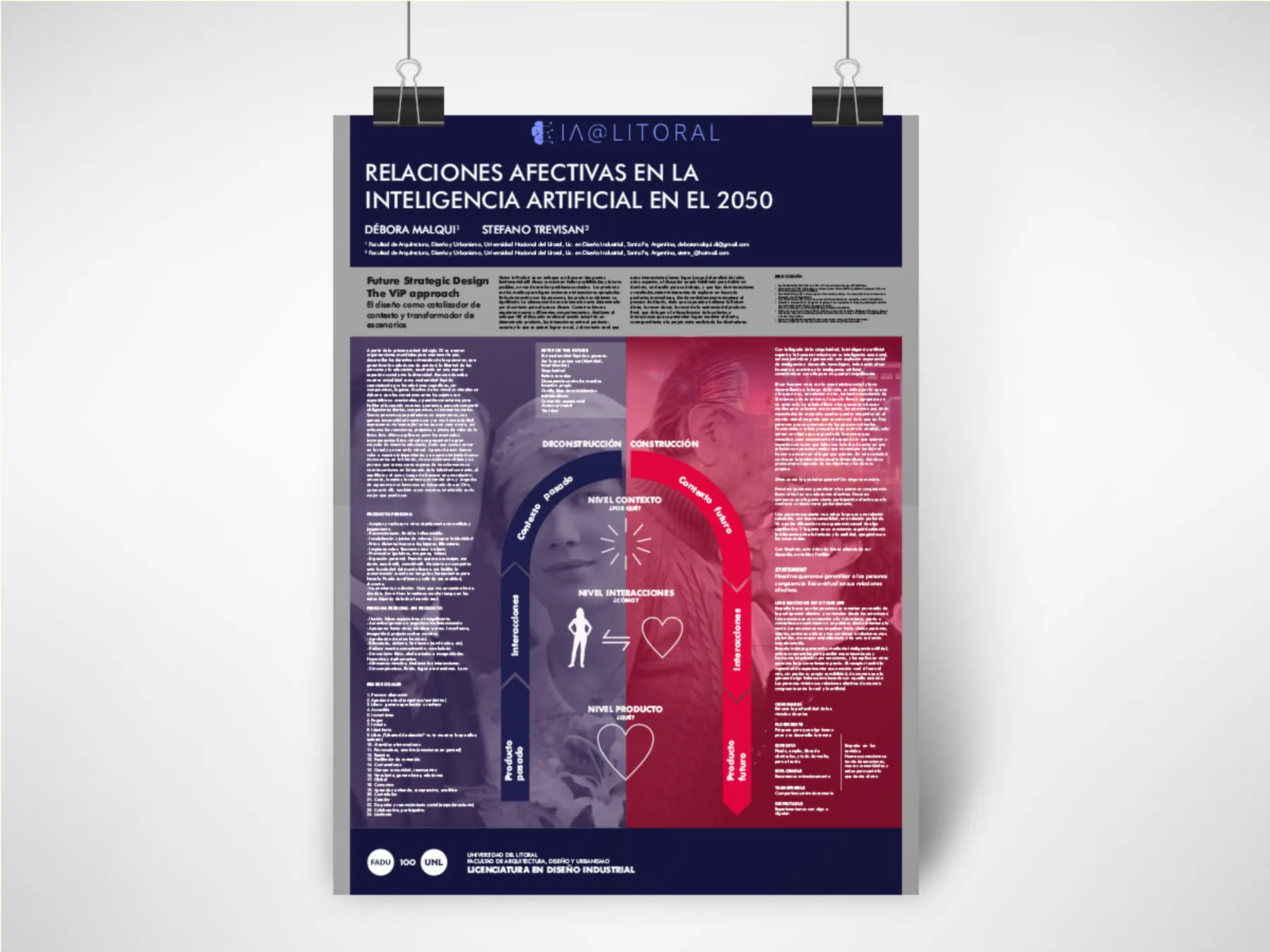
The method: deconstruct the present to build a future
Vision in Product Design (ViP) is a futures-design method. It doesn't start from a problem or a product: it starts from the context. First you deconstruct what exists on three levels, from the product to the interactions and from there to the context that explains them. Then you build in reverse order: you choose a future context, you define the relationship you want people to have with it, and only at the end does the product that makes that relationship possible appear. Design is the catalyst of a context and the transformer of a scenario.
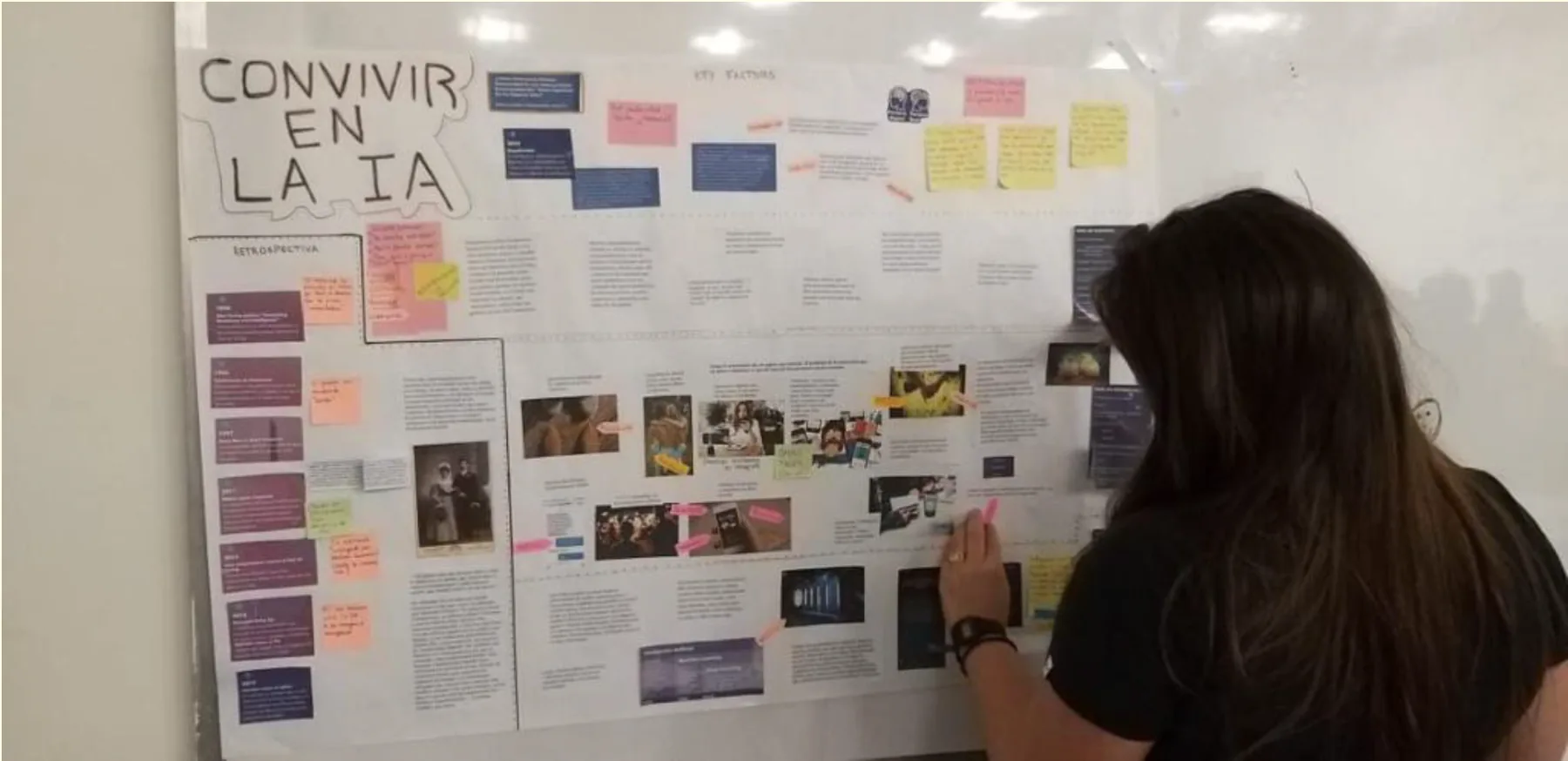
Deconstruction: from Turing to the singularity
The research starts in 1950, when Turing asks whether machines can think, and follows milestone by milestone: Dartmouth and the name «artificial intelligence» in 1956, Deep Blue against Kasparov in 1997, Watson in 2011, the Turing test passed in 2014, Tay and AlphaGo in 2016, Libratus at poker in 2017. The line ends in 2045, the date the literature sets for the singularity: computers that reason better than a person. Around it, the figures that give the scenario its scale: more than 9 billion people by 2050 according to the UN, and an artificial intelligence that would add 15.7 trillion dollars to the global economy by 2030, between productivity and demand.
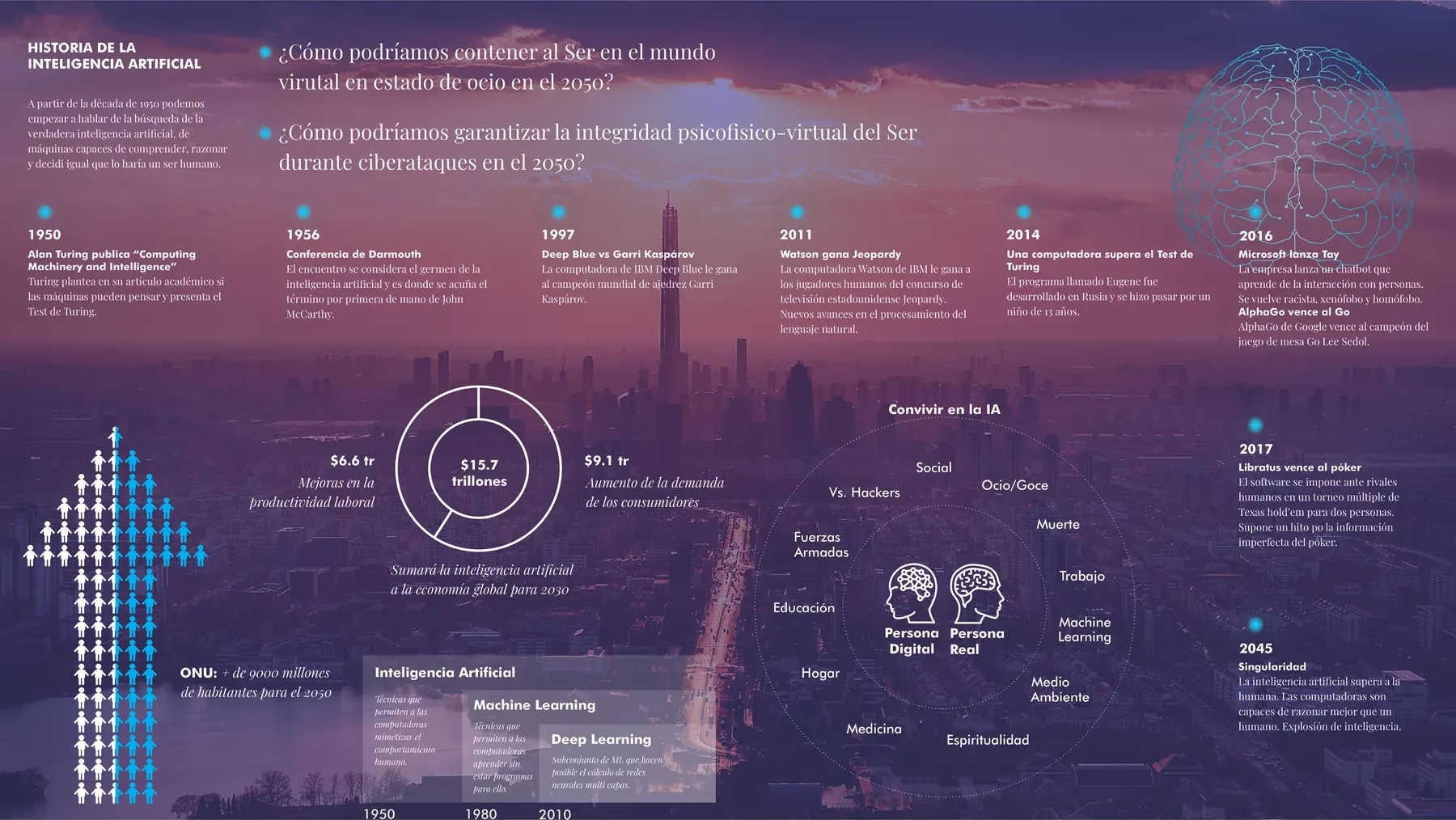
From there came the two design questions. How might we hold the self in the virtual world in a state of leisure in 2050? How might we guarantee its psychophysical and virtual integrity during cyberattacks in 2050?
The context map: themes and actors of 2050
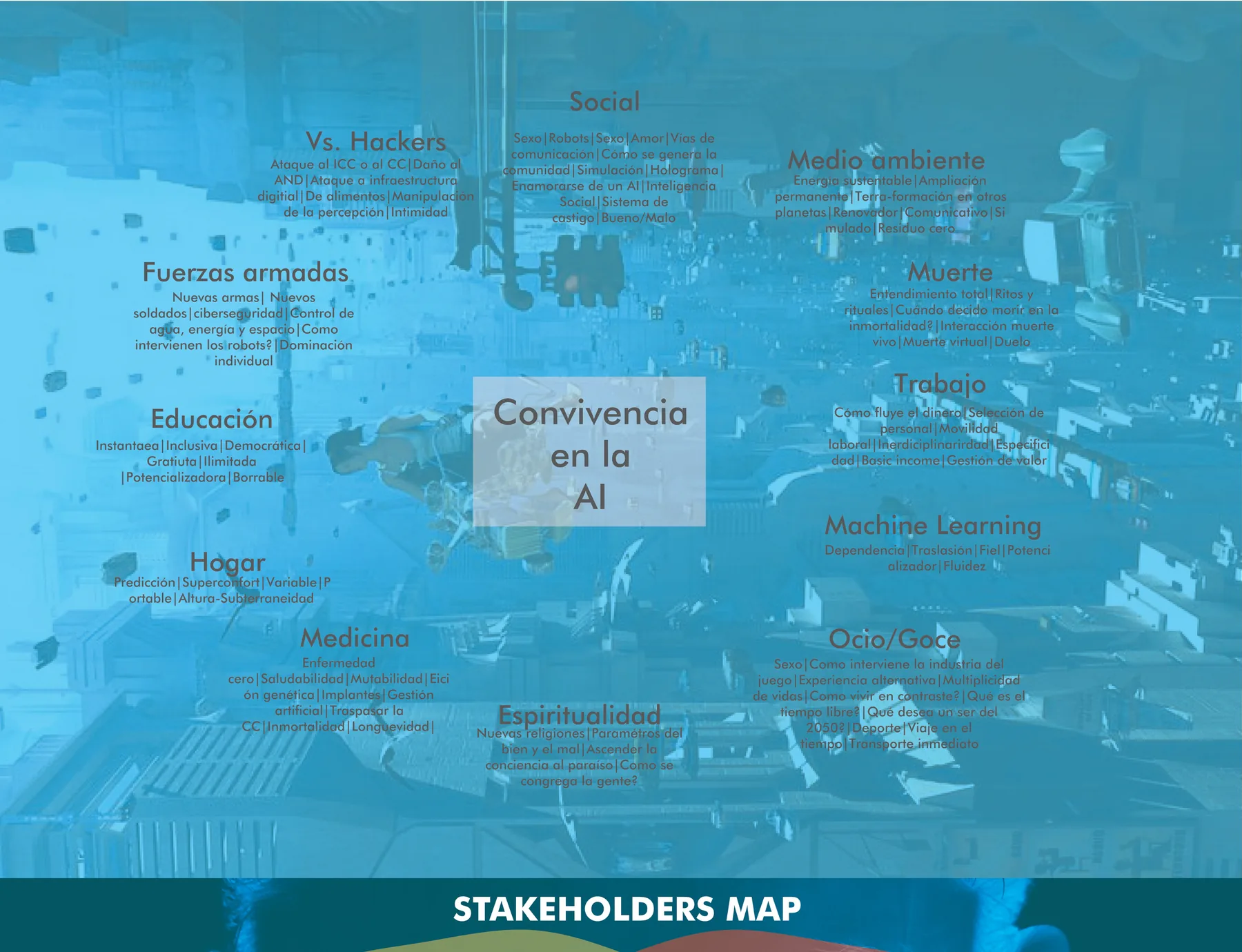
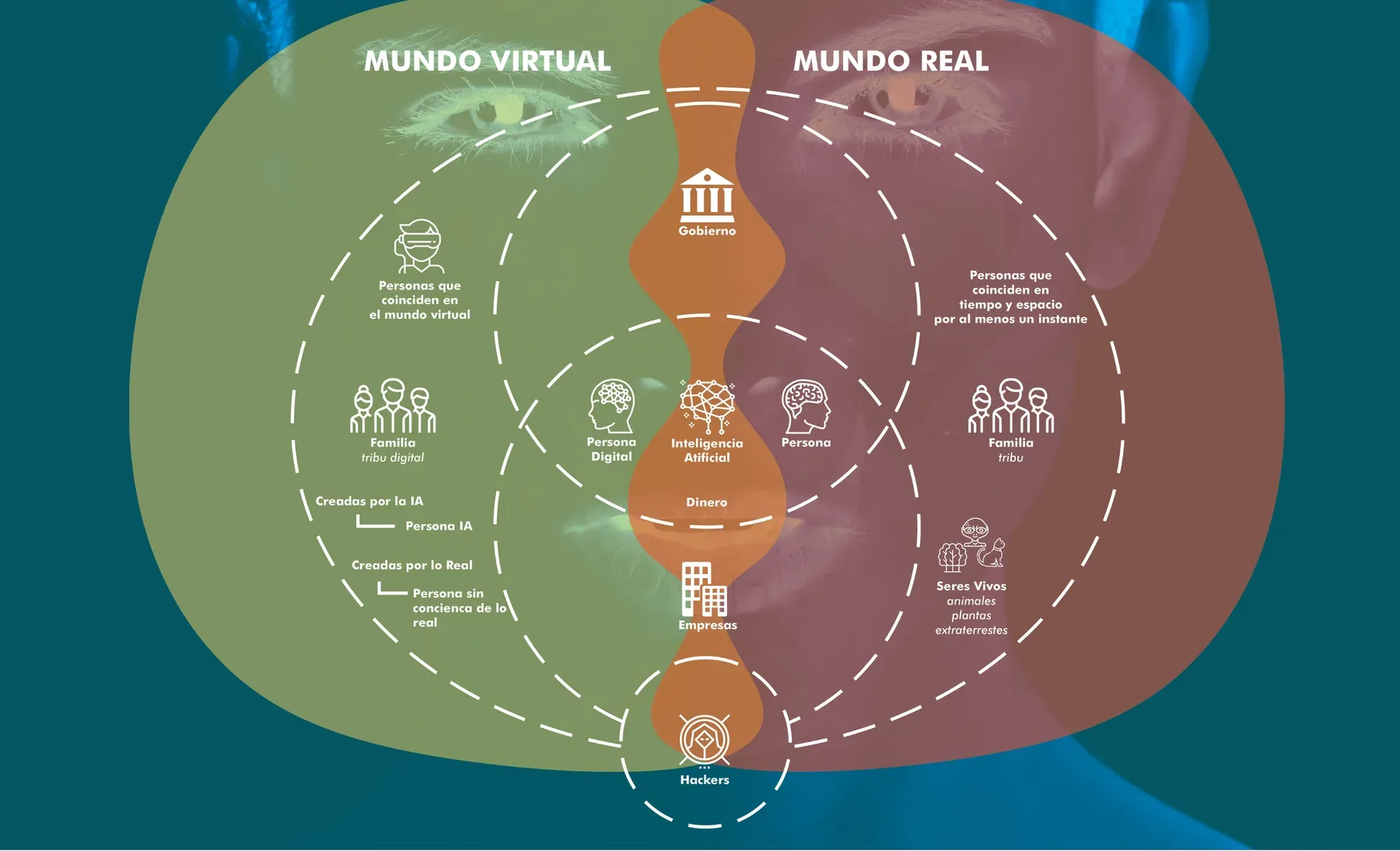
To build the future context we mapped twelve themes of living with artificial intelligence, each with its factors: social, environment, death, work, machine learning, leisure, spirituality, medicine, home, education, armed forces and hackers. And a map of actors in two overlapping worlds: the virtual and the real. At the intersection are government, companies, money and artificial intelligence; on the sides, the digital person and the person, the family as a digital tribe or as a tribe, living beings. On the edge, the hackers.
Swipe sideways or use the arrows. Tap a screenshot to enlarge it.
Worldview and statement
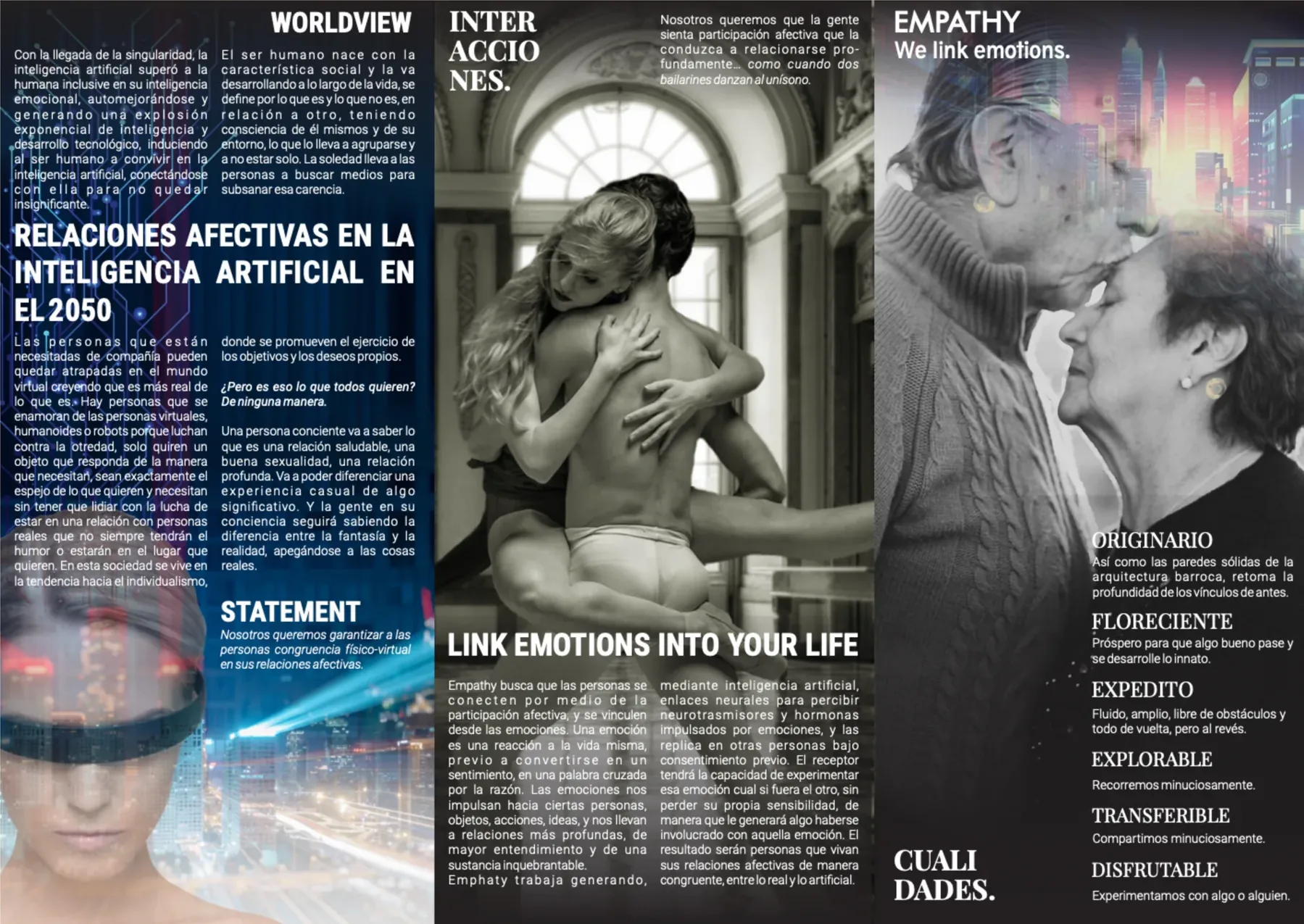
With the arrival of the singularity, artificial intelligence surpasses human intelligence in emotions too. People in need of company can get trapped in the virtual world believing it is more real than it is: they fall in love with virtual people or robots because they don't struggle with otherness, they just want an object that responds the way they need. It is a society that leans towards individualism. But human beings are born social and define themselves in relation to another, and a conscious person will keep knowing the difference between fantasy and reality, holding on to what is real.
Out of that tension came the statement: we want to guarantee people physical-virtual congruence in their affective relationships. And the interaction that defines it: affective participation that leads to relating in depth, like two dancers dancing in unison.
The product: Empathy, «we link emotions»
Empathy is the product concept that closes the scenario. It aims for people to connect through affective participation and to bond through emotions. It works with artificial intelligence and neural links that perceive the neurotransmitters and hormones an emotion drives and replicate them in another person, always with prior consent. The receiver can experience that emotion as if they were the other without losing their own sensitivity, and the result is affective relationships that are congruent between the real and the artificial.
The qualities that define it: originary, like the solid walls of baroque architecture that bring back the depth of the bonds of before; flourishing, so that something good happens and develops; expeditious, fluid and free of obstacles; explorable, transferable and enjoyable.
What I took away
It was the first time I worked on a scenario with a thirty-year horizon and a method to hold it up: first the context, then the relationship we want and only at the end the product. Seven years later I work with artificial intelligence every day, and the question on that poster is still the same: how much room we leave for what is real.